
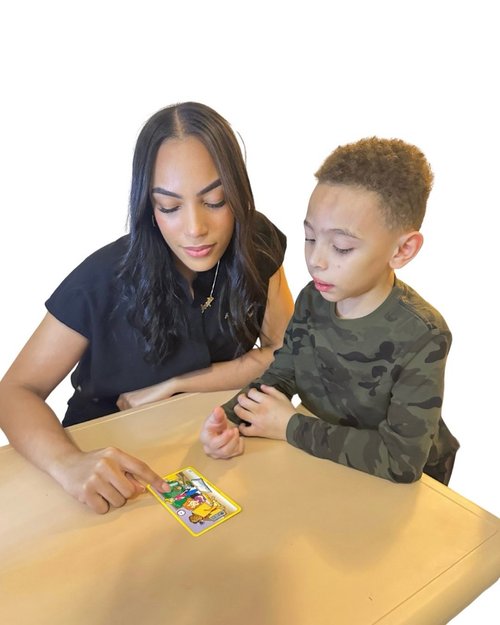
Every parent eagerly waits to hear their child’s first words. From babbling babies to chatty toddlers, speech development is an exciting journey. But many parents quietly wonder, When Should a Child Start Talking , and how do you know if your child is on track? Understanding typical milestones and recognizing early signs of delay can help you feel more confident and prepared to support your child’s communication growth.
Understanding Early Speech and Language Development
Speech and language development begin long before a child says their first word. Babies start communicating from birth through crying, facial expressions, and eye contact. Around 4 to 6 months, most infants begin babbling. By 9 months, they may use repetitive sounds like “mama” or “baba,” though these may not yet have meaning.
Most children say their first meaningful word between 12 and 15 months. By age two, many toddlers can use at least 50 words and combine two words together, such as “more milk” or “go outside.” By age three, speech becomes clearer, and children can form simple sentences.
These milestones provide general guidelines, but every child develops at their own pace.
What Factors Influence Talking Milestones?
Several factors affect when a child begins talking. These include hearing ability, exposure to language, personality, and overall development. Children who are read to frequently and engaged in conversation often develop stronger early language skills.
Family history can also play a role. If parents or siblings experienced speech delays, a child may have a higher likelihood of similar challenges. Premature birth or certain medical conditions may also influence development.
However, even in supportive environments, some children may struggle with speech due to underlying communication disorders.
Signs Your Child May Need Extra Support
While variations in development are normal, certain signs may indicate the need for professional evaluation. A child who is not babbling by 9 months, not saying single words by 16 months, or not combining two words by age two may benefit from further assessment.
Difficulty following simple instructions, limited eye contact, or frustration when trying to communicate can also signal concerns. In some cases, children may understand language but struggle to produce clear speech sounds.
Speech clarity is another important factor. Some children may have persistent sound errors beyond the expected age range. These challenges can sometimes be related to Articulation Disorders, which affect how specific sounds are formed.
If you notice these patterns, early intervention can make a meaningful difference.
Why Early Intervention Matters
Research consistently shows that early intervention leads to better long-term outcomes. The brain is highly adaptable during the early years, making it easier to strengthen communication pathways.
Early speech therapy focuses on building foundational skills such as vocabulary development, sound production, and sentence formation. Therapy may also address motor speech challenges, language comprehension, and social communication skills.
Seeking support does not mean something is seriously wrong. Instead, it provides your child with tools and strategies to succeed.
What Happens During a Speech Evaluation?
A comprehensive speech-language evaluation assesses several areas of communication. The therapist observes how your child understands language, produces sounds, combines words, and interacts socially.
Parents are often asked about developmental history, hearing screenings, and family concerns. The evaluation may include play-based activities to keep the child engaged while gathering important information.
After assessment, an individualized plan is developed based on your child’s strengths and areas of need.
Therapy That Fits Your Child
Speech therapy is most effective when it is individualized and family-centered. A neurodiversity-affirming, child-led approach respects each child’s unique communication style and developmental profile.
Therapy may focus on expanding vocabulary, improving clarity, strengthening motor planning, or introducing Augmentative and Alternative Communication tools if needed. In-home services can provide a comfortable setting where children practice skills within their natural routines.
Parents are guided on how to reinforce strategies during everyday activities. Simple techniques like modeling short phrases, expanding on your child’s words, and creating opportunities for communication throughout the day can accelerate progress.
Supporting Speech at Home
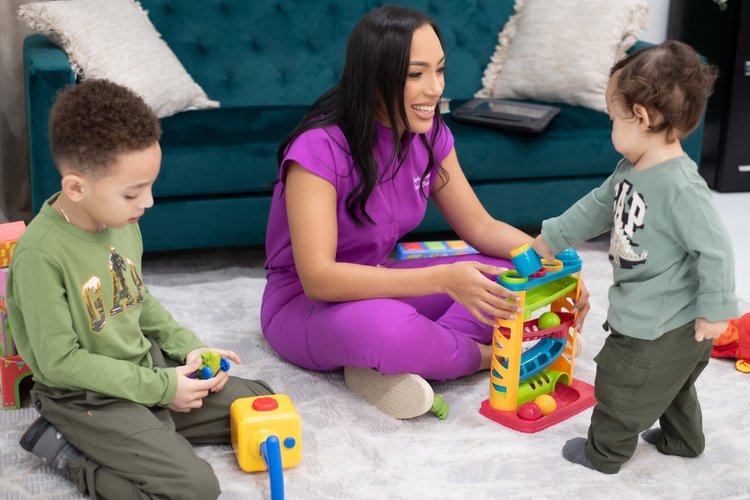
Parents play a powerful role in language development. Talking frequently with your child, reading books together, singing songs, and responding to attempts at communication all strengthen language skills.
Narrate daily activities such as cooking or getting dressed. Pause during familiar songs or stories to encourage participation. Ask simple questions and give your child time to respond.
Limiting passive screen time and increasing face-to-face interaction also supports speech growth. Even small daily habits can create meaningful improvement over time.
When to Seek Professional Guidance
If you are unsure whether your child’s speech development is typical, trust your instincts. You do not need to wait for your child to “catch up” on their own. Consulting a licensed speech-language therapist can provide clarity and peace of mind.
Early support can address concerns before they affect social confidence or academic readiness. Whether your child has a mild delay or a more complex communication disorder, individualized therapy can provide the guidance needed for progress.
Conclusion
Every child develops at their own pace, but understanding speech milestones helps parents recognize when extra support may be helpful. If you have been asking yourself, When Should a Child Start Talking, remember that early evaluation and intervention can make a significant difference. With individualized, family-centered, and neurodiversity-affirming speech therapy, children can build strong communication skills and gain the confidence to express themselves clearly.
Frequently Asked Questions
1. Is it normal for boys to talk later than girls?
Some studies suggest slight differences, but both boys and girls should follow general developmental milestones. Significant delays should be evaluated regardless of gender.
2. Can speech delays resolve without therapy?
Some mild delays may improve naturally, but persistent concerns benefit from professional evaluation and targeted support.
3. At what age should I be concerned about unclear speech?
If your child’s speech is difficult for familiar adults to understand after age three, or if progress seems stalled, a speech-language evaluation is recommended.